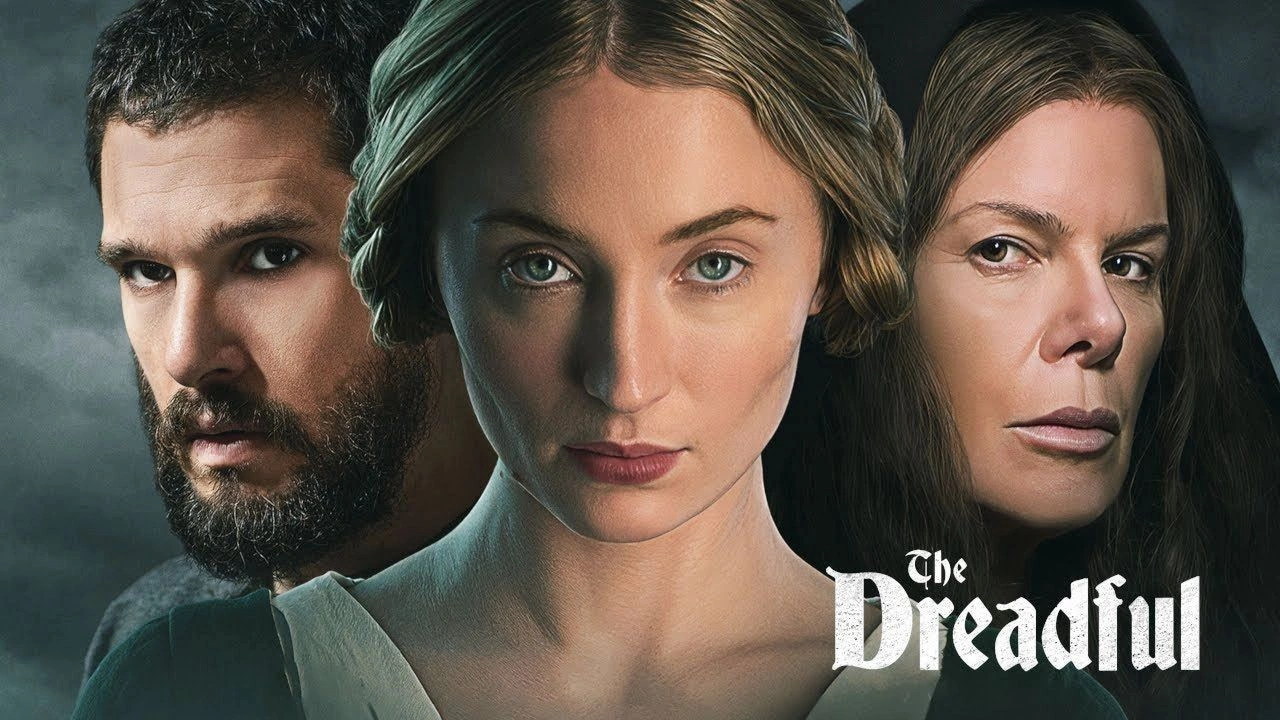
The Dreadful Movie: A quiet life on society’s edge unravels when an unexpected return ignites fear, memory, and irreversible transformation for Anne.
In the evolving landscape of modern psychological horror, “The Dreadful” emerges as a film defined not by spectacle, but by atmosphere, emotion, and the slow burn of human trauma. Written and directed by Natasha Kermani, the film brings together an evocative cast—Sophie Turner, Kit Harington, and Marcia Gay Harden—to tell a story rooted in isolation, memory, and the dangerous weight of unresolved history.
Set for release on February 20, 2026, in the United Kingdom, this horror-thriller promises an intimate yet deeply unsettling cinematic experience. Rather than relying on conventional scares, the narrative appears focused on psychological tension, character transformation, and the fragile boundary between safety and fear. The result is a film positioned to resonate with audiences who seek meaningful storytelling within the horror genre.
A Story Built on Isolation, Survival, and Unspoken History
At the heart of “The Dreadful” are Anne and her mother-in-law Morwen, two women living a solitary and unforgiving existence on the margins of society. Their world is shaped by hardship, routine, and silence—an emotional landscape where survival leaves little room for hope or change.

Isolation in horror often functions as more than a setting; it becomes a psychological condition. Removed from community and comfort, characters are forced to confront their own memories, regrets, and fears without distraction. In this environment, even the smallest disruption can feel catastrophic.
That disruption arrives when a man from their past suddenly returns, triggering a chain reaction of events that threatens the fragile stability Anne has built. His presence is not merely physical—it represents history resurfacing, secrets exposed, and emotions long suppressed. What follows is not just danger, but transformation, marking a decisive turning point in Anne’s life.
Read Also: Ikkis Movie OTT Release: When and Where to Watch Agastya Nanda & Dharmendra’s War Biopic
Natasha Kermani’s Vision: Psychological Horror Over Spectacle
Writer-director Natasha Kermani has developed a reputation for crafting stories that emphasize inner conflict, emotional realism, and thematic depth. With “The Dreadful,” her creative approach appears centered on tension that grows quietly rather than explodes suddenly.
This style aligns with a tradition of psychological horror in which fear emerges from:
- Memory and trauma rather than monsters
- Silence and atmosphere rather than loud shocks
- Human relationships rather than supernatural spectacle
Such storytelling demands patience from both filmmaker and audience. Yet when executed effectively, it produces a more lasting emotional impact, lingering long after the film ends.
Kermani’s dual role as writer and director also suggests a unified artistic vision, where theme, tone, and character development remain tightly interconnected. This cohesion often defines the most memorable films within the genre.
Sophie Turner’s Anne: A Character on the Edge of Change
Central to the film’s emotional gravity is Anne, portrayed by Sophie Turner. Known for embodying characters who evolve under pressure, Turner’s casting hints at a performance driven by vulnerability, resilience, and quiet strength.
Anne’s journey appears less about external survival and more about internal awakening. The returning figure from her past forces confrontation with:
- Hidden truths
- Unresolved grief or guilt
- The possibility of reclaiming identity
Such arcs are powerful because they mirror real human emotional processes. Horror becomes a lens through which audiences explore healing, fear, and transformation.
If realized fully, Anne could stand among modern horror’s most psychologically complex protagonists, grounding the film’s tension in authentic human experience.
Kit Harington and the Power of a Returning Past
The arrival of the man from the past, played by Kit Harington, functions as the film’s catalytic force. In psychological thrillers, returning figures often symbolize unfinished stories demanding resolution.
Harington’s screen presence—capable of conveying intensity, mystery, and emotional conflict—suggests a character layered with ambiguity rather than simple villainy. His role may blur the line between:
- Threat and memory
- Truth and perception
- Redemption and destruction
Such ambiguity deepens suspense. Instead of asking only what will happen, audiences begin asking what truly happened before—a far more unsettling question.
Marcia Gay Harden’s Morwen: Strength, Silence, and Survival
Completing the central trio is Morwen, portrayed by Marcia Gay Harden, an actor celebrated for emotionally commanding performances. Morwen represents endurance shaped by hardship, a figure whose strength may conceal pain, secrets, or sacrifice.
Mother-in-law relationships in cinema often explore tension, loyalty, and generational difference. Within a horror framework, these dynamics gain sharper intensity, as survival pressures reveal hidden emotional fractures.
Morwen’s role may ultimately determine whether Anne’s transformation leads toward liberation or deeper darkness, making her presence essential to the film’s thematic core.
Horror and Thriller Elements: Fear Rooted in Reality
Unlike supernatural horror, “The Dreadful” appears grounded in psychological and emotional realism. This approach often proves more disturbing because it suggests the events could truly happen.
Key fear mechanisms likely include:
- Uncertainty about motive and truth
- Slow escalation of tension
- Confined environments amplifying vulnerability
- Emotional betrayal replacing physical monsters
Such elements create sustained dread rather than momentary shock, aligning perfectly with the film’s title.
The Symbolism of the Title “The Dreadful”
Titles in psychological horror often serve as emotional roadmaps. The word “dreadful” evokes not just terror, but anticipation of inevitable suffering—a feeling of waiting for something terrible that cannot be stopped.
This emotional state is central to slow-burn thrillers, where tension accumulates gradually until release becomes unavoidable. The title therefore signals a film concerned with feeling as much as plot, emphasizing mood, inevitability, and consequence.
A United Kingdom Setting and Cultural Tone
Originating from the United Kingdom, the film may reflect British horror traditions known for:
- Atmospheric restraint
- Psychological depth
- Character-focused storytelling
Rather than large-scale spectacle, British genre cinema often prioritizes intimacy and moral complexity, qualities that align closely with Kermani’s narrative style.
Release Timing and Audience Expectations in 2026
Arriving in February 2026, “The Dreadful” enters a cinematic moment where audiences increasingly appreciate elevated horror—films that combine artistic storytelling with genuine suspense.
Viewers today often seek horror that offers:
- Emotional meaning
- Character depth
- Social or psychological themes
If the film fulfills these expectations, it could achieve critical recognition alongside audience engagement, strengthening its long-term cultural impact.
Themes of Memory, Trauma, and Transformation
Beneath the thriller surface, “The Dreadful” appears to explore deep psychological themes:
- How the past shapes identity
- Whether healing requires confrontation
- The cost of silence and survival
Such themes elevate the film from simple genre entertainment to character-driven drama infused with horror tension. This fusion often defines the most enduring works in modern cinema.
Read Also: Toxic Movie 2026: Yash Headlines a Dark, Multilingual Crime Epic Set in Goa’s Shadowy Underworld
Official Trailer – The Dreadful Movie
Conclusion: Quiet Horror With Lasting Emotional Power
Everything known about “The Dreadful” points toward a film that values emotion over spectacle, tension over shock, and transformation over simple survival. Guided by Natasha Kermani’s unified creative vision and brought to life by a deeply capable cast, the story promises a haunting exploration of past, pain, and possibility.
If executed with the care its premise suggests, “The Dreadful” may become more than a thriller. It could stand as a meditation on how confronting darkness—within memory, family, and self—can reshape the future.
For audiences drawn to psychological intensity and meaningful horror, this film may prove not only frightening, but profoundly unforgettable.
13 thoughts on “The Dreadful Movie 2026: A Haunting Psychological Thriller Where the Past Refuses to Stay Buried”