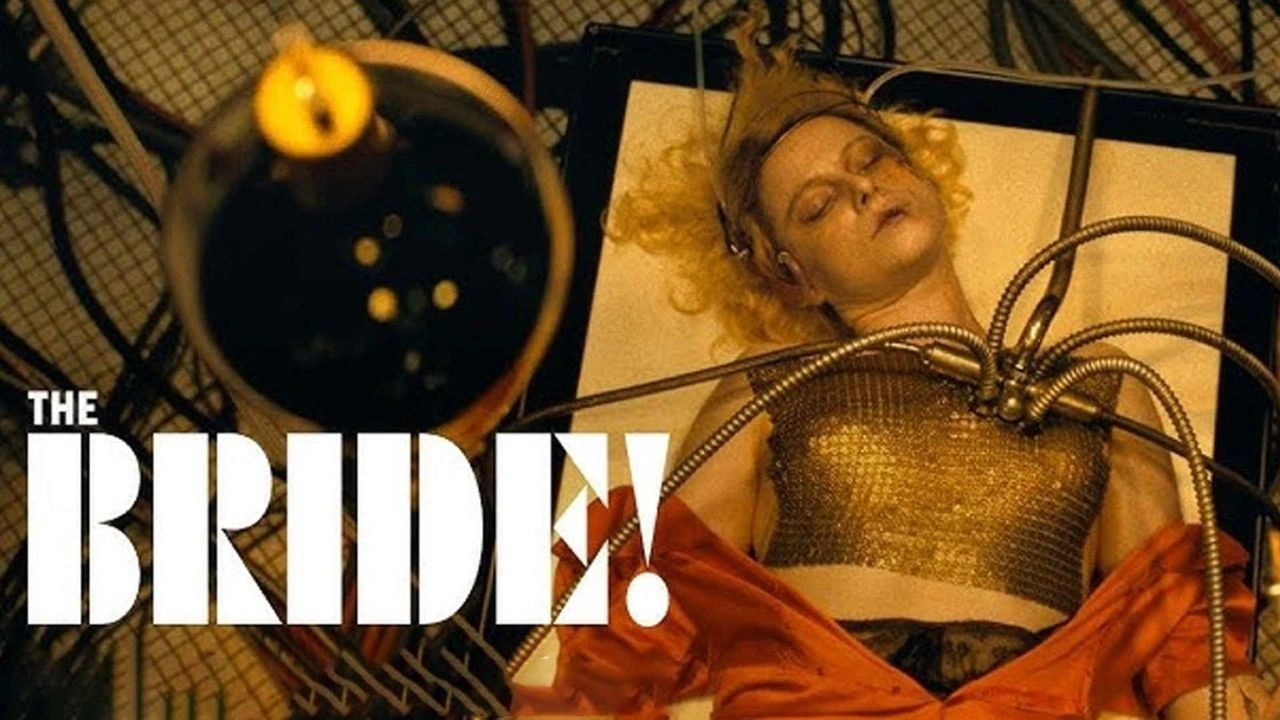
The Bride! Movie: In 1930s Chicago, a lonely Frankenstein seeks Dr. Euphronius’s help to create a companion, resurrecting a murdered woman as the Bride—an act that ignites romance, police suspicion, and sweeping social upheaval. Directed and written by Maggie Gyllenhaal, and starring Jessie Buckley, Jake Gyllenhaal, and Christian Bale, this genre-blending drama-horror-romance-sci-fi epic arrives March 6, 2026 (United Kingdom), from the United States, in English.
A New Myth in an Old City: Why 1930s Chicago Matters
Setting The Bride! in 1930s Chicago is more than a stylistic flourish—it’s a narrative engine. The era’s Great Depression anxieties, labor unrest, and the fading glamour of Prohibition-era vice create a city teetering between ambition and collapse. Smokestacks puncture gray skies. Jazz clubs glow with defiant energy. Political machines grind behind closed doors. Against this backdrop, the resurrection of a murdered woman is not simply a scientific marvel; it is a spark in a city primed for combustion.
Chicago in the ’30s was a crucible of reinvention. Factories rose and shuttered in equal measure; immigrants reshaped neighborhoods; moral codes were contested in public and private life. In such a place, the boundary between life and death—already blurred by poverty, violence, and illness—feels perilously thin. The film leverages this tension to ask a provocative question: If a city can reinvent itself after ruin, can a person do the same?
By transplanting the Frankenstein myth from gothic castles to industrial America, Gyllenhaal reframes the story as one about modernity itself. Electricity, machinery, and mass production are no longer mere tools—they are symbols of a society obsessed with building, consuming, and controlling. The Bride’s return becomes a mirror reflecting that obsession.
Read Also: The Dreadful Movie 2026: A Haunting Psychological Thriller Where the Past Refuses to Stay Buried
Maggie Gyllenhaal’s Authorial Vision: From Spectacle to Soul
As both director and writer, Maggie Gyllenhaal crafts a cohesive vision that prioritizes emotional truth over shock value. Traditional Frankenstein adaptations often hinge on laboratory theatrics—lightning bolts, crackling coils, the grand spectacle of creation. Here, the emphasis shifts to aftermath and consequence.
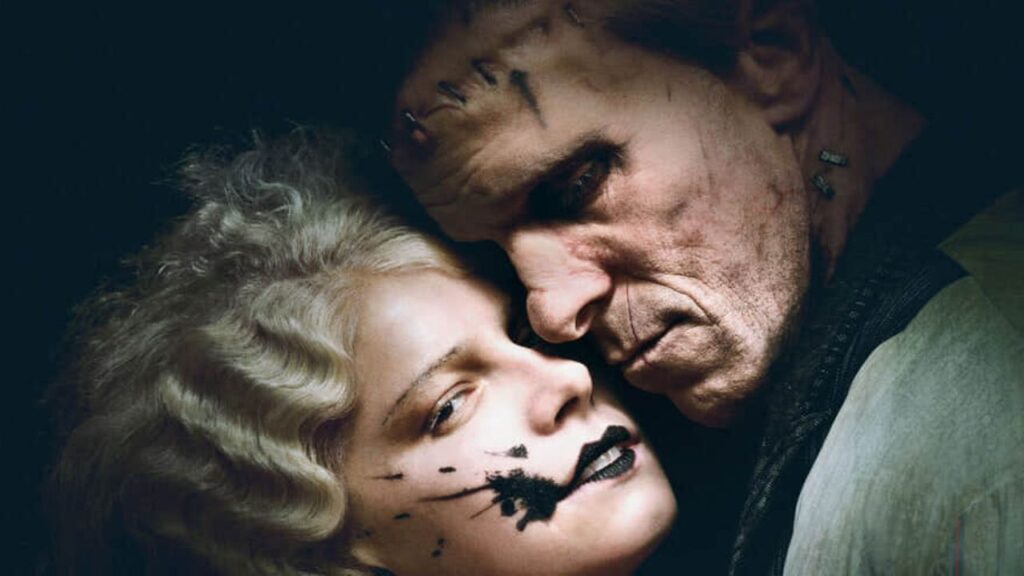
Gyllenhaal’s interpretation centers on agency, intimacy, and accountability. The act of creation is not a triumphant crescendo but a morally fraught decision that reverberates outward. Frankenstein’s longing for companionship is portrayed not as villainy but as vulnerability—yet vulnerability does not absolve responsibility. Dr. Euphronius, the scientific collaborator, becomes a counterweight, embodying curiosity tempered by ethical unease.
This creative stance aligns with Gyllenhaal’s broader artistic reputation: nuanced character studies, layered power dynamics, and a refusal to flatten women into archetypes. The Bride is not a stitched-together accessory; she is the emotional core and catalytic force. Her resurrection shifts the narrative gravity away from male ambition and toward female consciousness awakening under extraordinary circumstances.
Jessie Buckley’s Bride: Resurrection as Reckoning
Portrayed by Jessie Buckley, the Bride emerges not as a blank slate but as a woman with a past—one violently cut short. She awakens to the knowledge that she was murdered, a revelation that transforms her second life into a quest for meaning. Her presence is both a miracle and indictment.
Buckley’s performance promises a dynamic spectrum: fragile confusion, simmering anger, cautious curiosity, and ultimately fierce autonomy. The Bride’s journey is not simply about falling in love or rejecting her creator. It is about defining herself beyond the circumstances of her revival. What does identity mean when your body has been reclaimed but your history is fractured?
The film leans into this existential tension. Memories surface in flashes. The city feels both familiar and alien. She walks streets she once knew, now shadowed by whispers and suspicion. As police scrutiny intensifies, the Bride confronts the haunting truth that society may prefer her dead to uncontainable.
Her arc reframes resurrection as reckoning. Life is not a gift without cost; it is a responsibility that demands confrontation—with trauma, with expectation, with those who would define her.
Jake Gyllenhaal’s Frankenstein: Love, Loneliness, and Control
Jake Gyllenhaal steps into the role of Frankenstein not as a cackling caricature but as a complex, wounded visionary. His desire for a companion is rooted in isolation—a man adrift in a city of millions. Yet good intentions do not negate imbalance. He has, after all, engineered the conditions of her return.
The romance that unfolds between Frankenstein and the Bride is layered with ambiguity. Attraction simmers, but so does unease. Can affection exist where authorship looms? Is love authentic if one party has orchestrated the other’s existence?
The film avoids easy answers. Instead, it explores the shifting power dynamics of their relationship. As the Bride asserts independence, Frankenstein must reconcile admiration with fear. He wanted a companion; he may have created a revolution.
Gyllenhaal’s portrayal underscores the tragedy of misguided control. Frankenstein is not monstrous because he animates life—he becomes monstrous if he cannot relinquish ownership. The narrative thus pivots from “creation as sin” to “control as corruption.”
Christian Bale’s Dr. Euphronius: Science at the Edge of Morality
In the role of Dr. Euphronius, Christian Bale embodies intellectual rigor strained by ethical boundaries. As the scientific architect behind the procedure, he is fascinated by possibility yet haunted by implication.
Euphronius serves as the story’s philosophical hinge. He recognizes the magnitude of what they have done. The Bride’s successful revival validates his theories—but it also destabilizes his moral compass. He becomes increasingly aware that scientific triumph cannot be disentangled from societal fallout.
Through Bale’s nuanced performance, the film interrogates the age-old question: Just because we can, should we? In an era of burgeoning technological optimism—mirroring today’s debates about artificial intelligence and genetic manipulation—the character resonates as a cautionary emblem.
Euphronius’s arc may not hinge on romance or rebellion, but on reckoning. He must decide whether to defend the experiment or protect the woman at its center from exploitation.
Police Interest and Public Panic: The Cost of Defying Nature
The Bride’s reappearance inevitably draws law enforcement scrutiny. A murdered woman walking the streets is not merely a curiosity—it is a threat to institutional order. Detectives probe inconsistencies. Newspapers fan rumors. Religious leaders decry blasphemy.
Police interest transforms the private act of resurrection into public spectacle. The film weaves procedural tension into its gothic framework, amplifying stakes. Courtrooms and interrogation rooms replace laboratories as battlegrounds for truth.
Beyond the immediate investigation lies broader social unrest. Chicago’s working-class communities, already strained by economic hardship, react unpredictably. Some see the Bride as a symbol of hope—a testament to resilience. Others perceive her as an abomination destabilizing fragile norms.
Her existence fractures consensus. The city becomes a chorus of competing interpretations: miracle, monster, martyr, menace. Through this cacophony, the narrative explores how societies respond to the unprecedented.
Genre Fusion: Where Drama, Horror, Romance, and Sci-Fi Converge
Classified across Drama, Horror, Romance, and Sci-Fi, The Bride! refuses confinement. Horror pulses in its existential dread; drama anchors its character conflicts; romance ignites emotional stakes; science fiction frames the speculative premise.
Yet the film’s greatest strength may lie in its refusal to privilege one genre over another. Instead, it synthesizes them into a cohesive meditation on humanity. The horror is not limited to macabre imagery; it emerges from alienation, control, and societal backlash. The romance is not escapist; it is fraught with moral complexity. The sci-fi elements are not coldly technical; they are intensely personal.
Visually, the aesthetic promises chiaroscuro lighting, Art Deco interiors, and industrial sprawl. The city’s architecture becomes a metaphor—steel and stone striving upward while shadows pool below. The Bride, framed against this landscape, embodies both fragility and defiance.
Feminist Reclamation: The Bride at the Center
Historically, the Bride of Frankenstein has often been marginalized—an accessory to a male protagonist’s narrative. This film decisively reorients that perspective. The resurrected woman is not defined by her function as companion; she is defined by her own consciousness.
By situating her at the narrative forefront, Gyllenhaal challenges cinematic tradition. The Bride’s story becomes a commentary on autonomy. She grapples with expectations imposed upon her: to be grateful, obedient, loving. Instead, she seeks agency.
The film thus becomes a feminist reclamation of myth. It interrogates the dynamics of creation, possession, and voice. In a world that often attempts to script women’s roles, the Bride rewrites hers.
This thematic emphasis resonates with contemporary audiences. The idea of reclaiming identity after trauma—of insisting on self-definition—feels urgent and universal.
Social Change as Narrative Consequence
The film’s synopsis hints at “radical social change,” and this dimension elevates the story beyond personal drama. The Bride’s existence disrupts institutions: legal, religious, scientific. Her survival forces reevaluation of life’s boundaries.
In 1930s Chicago, where economic and political systems were already in flux, such disruption could catalyze reform—or repression. The narrative likely explores protests, public debates, and ideological schisms.
Creation becomes revolution. Not through violence, but through presence. The mere fact of her living body challenges doctrines. It compels conversations about rights, consent, and humanity.
In doing so, the film aligns itself with broader cultural discourse. As modern society wrestles with questions about biotechnology and personhood, The Bride! uses historical fiction to illuminate contemporary anxieties.
Release and Anticipation: March 6, 2026
Set to premiere on March 6, 2026, in the United Kingdom, the film represents a major U.S. production delivered in English with global resonance. The combination of Maggie Gyllenhaal’s creative leadership and a powerhouse cast fuels awards-season speculation.
Anticipation stems not only from star power but from thematic ambition. By merging period detail with philosophical inquiry, the film promises intellectual and emotional impact.
Industry observers note that such genre-blending projects often redefine expectations. If successful, The Bride! could join the ranks of modern reinterpretations that revitalize classic literature for new generations.
Read Also: Ek Din Movie 2026: A Tender Love Story About One Wish, One Day, and a Lifetime of Emotions
Official Trailer – The Bride! Movie
Conclusion: A Resurrection That Speaks to Now
At its core, The Bride! is not merely a retelling of Frankenstein. It is a meditation on identity, love, control, and transformation. By situating the narrative in 1930s Chicago and centering the resurrected woman’s perspective, Maggie Gyllenhaal crafts a story that feels both timeless and urgently contemporary.
The film challenges audiences to reconsider who holds power in acts of creation. It reframes romance as negotiation rather than destiny. It interrogates science without condemning curiosity. Most importantly, it grants the Bride a voice—one that echoes beyond laboratory walls into the streets of a restless city.
In resurrecting a murdered woman, the characters ignite more than life; they ignite debate, defiance, and possibility. And in doing so, The Bride! stands poised to become one of 2026’s most compelling cinematic events—an ambitious fusion of gothic myth and modern consciousness that dares to ask what it truly means to be alive.