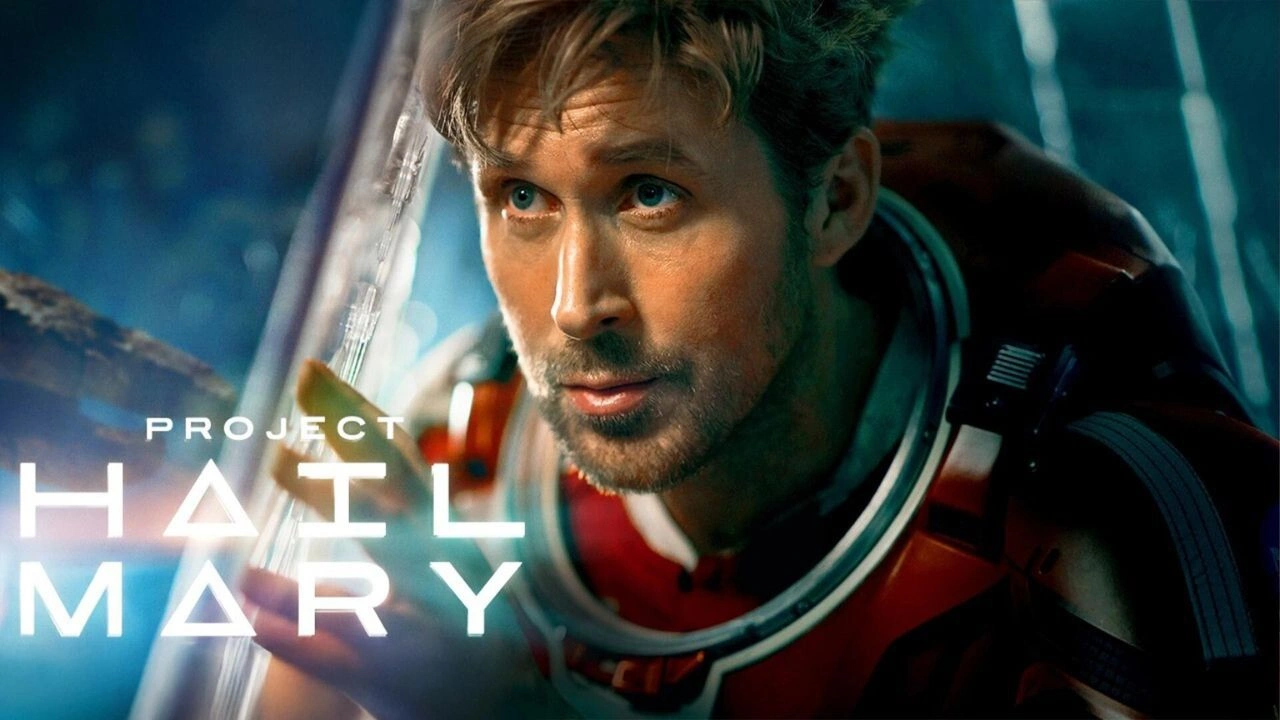
Project Hail Mary Movie: A lone astronaut awakens in deep space with fading memories, racing against cosmic extinction through science and unexpected friendship.
The highly anticipated adaptation of Project Hail Mary is set to reach cinemas on March 20, 2026 (United Kingdom), bringing one of modern science fiction’s most compelling survival stories to the big screen. Directed by the acclaimed filmmaking duo Phil Lord and Christopher Miller, and written for the screen by Drew Goddard, the film is based on the bestselling novel by Andy Weir.
Starring Ryan Gosling as Ryland Grace, alongside Milana Vayntrub and Ken Leung, the film blends hard science fiction, emotional drama, and edge-of-your-seat thriller elements into a story that explores humanity’s resilience when faced with extinction.
A High-Concept Premise Rooted in Science
At its core, Project Hail Mary tells the story of Ryland Grace, a middle-school science teacher who awakens alone aboard a spacecraft, light-years away from Earth. He has no memory of who he is or why he’s there. Gradually, fragmented recollections return, revealing a staggering truth:
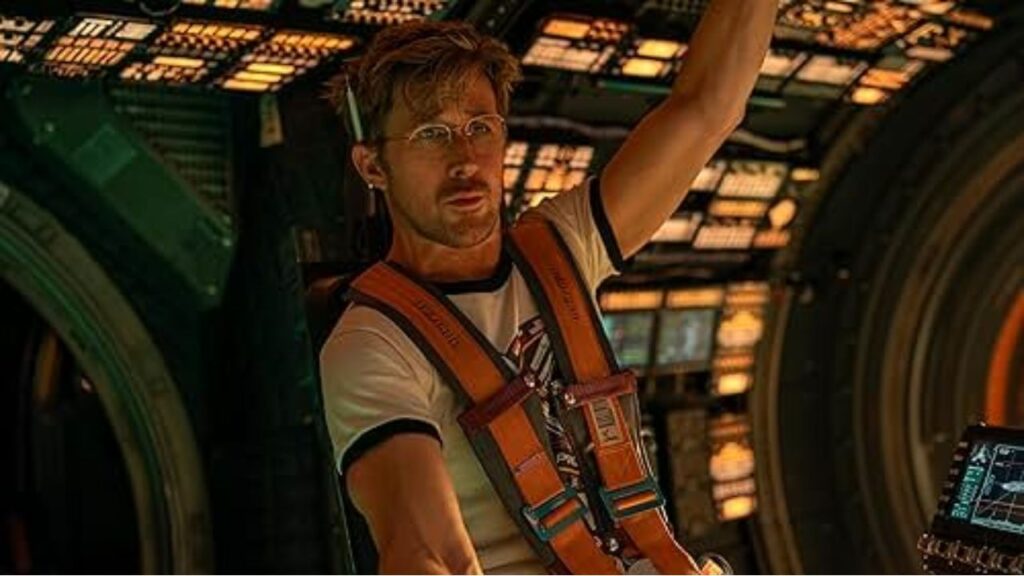
The Sun is dying.
A mysterious microorganism, nicknamed “Astrophage,” is draining energy from the Sun and other stars across the galaxy. Earth’s survival hinges on finding a solution before global collapse becomes irreversible. Grace realizes he is humanity’s last hope — sent on a desperate interstellar mission to identify the source of the threat and stop it.
What sets this narrative apart is its grounding in plausible science. Much like Andy Weir’s earlier work, the story emphasizes problem-solving through physics, chemistry, biology, and mathematics, turning complex scientific ideas into accessible cinematic stakes.
Read Also: Ikkis Movie OTT Release: When and Where to Watch Agastya Nanda & Dharmendra’s War Biopic
Ryan Gosling as Ryland Grace: A Reluctant Hero
Casting Ryan Gosling as Ryland Grace adds emotional depth and global appeal. Gosling has built a career portraying introspective, layered characters, and Grace is no conventional action hero.
He is a teacher — intelligent, curious, but not trained for space warfare or cosmic heroics. His bravery stems not from physical dominance but from intellectual perseverance. As his memory returns, viewers witness his transformation from confused survivor to determined scientist.
Gosling’s performance is expected to balance humor, vulnerability, and tension. The narrative often places Grace in isolation, requiring subtle emotional shifts to carry scenes. This is not merely a spectacle-driven sci-fi film; it is a character study of resilience under unimaginable pressure.
The film’s emotional stakes intensify as Grace confronts his own fears and moral dilemmas. The audience is invited to ask: What would you sacrifice to save billions?
The Vision of Phil Lord and Christopher Miller
The directorial team of Phil Lord and Christopher Miller brings a dynamic creative energy to the project. Known for blending humor with heartfelt storytelling, they face the challenge of adapting a novel dense with scientific exposition.
Their strength lies in balancing tone. While the story carries apocalyptic stakes, it also contains moments of levity and warmth. Lord and Miller’s ability to weave emotional authenticity into high-concept narratives positions the film for both critical acclaim and mainstream success.
Visually, the directors are expected to lean into immersive production design. The spacecraft becomes a central character — sterile, isolating, yet oddly intimate. Lighting and sound design will likely emphasize the vastness of space contrasted against the fragility of human life.
Drew Goddard and the Art of Adaptation
Translating Andy Weir’s meticulous scientific prose into a cinematic format requires careful restructuring. Drew Goddard, known for his sharp narrative instincts, adapts the novel while maintaining its intellectual core.
The screenplay reportedly preserves the story’s puzzle-solving structure. Instead of overwhelming audiences with technical jargon, the film contextualizes scientific breakthroughs through suspenseful sequences.
Flashbacks play a crucial role in revealing Grace’s recruitment and the political tensions surrounding Earth’s survival plan. This layered storytelling approach sustains tension while gradually building emotional investment.
An Unexpected Friendship That Redefines the Mission
One of the most powerful elements of Project Hail Mary is the formation of an unlikely interstellar friendship. While details remain carefully guarded in promotional materials, readers of the novel know that Grace encounters an alien being whose species faces the same cosmic threat.
Rather than presenting extraterrestrials as antagonists, the story emphasizes collaboration. Two species, separated by biology and language, unite against extinction.
This relationship introduces themes of trust, communication, and shared survival. It also transforms the narrative from solitary survival into something profoundly hopeful.
The friendship dynamic adds warmth to an otherwise isolating setting. It reminds audiences that cooperation — even across unimaginable divides — may be humanity’s greatest strength.
Milana Vayntrub and Ken Leung: Anchoring Earth’s Perspective
Milana Vayntrub and Ken Leung portray key figures connected to Earth’s desperate response to the solar crisis.
Their characters ground the film’s emotional stakes. Through flashbacks and mission briefings, audiences witness the global panic and ethical compromises made to launch Project Hail Mary.
Ken Leung’s intensity often brings gravitas to morally complex roles, and his presence suggests nuanced political tension. Meanwhile, Vayntrub’s performance is expected to inject both intellect and empathy into the narrative.
Together, they expand the film beyond the spacecraft, illustrating the collective fear and hope of a planet on borrowed time.
Themes of Survival, Sacrifice, and Scientific Integrity
At its heart, Project Hail Mary explores what humanity becomes when faced with annihilation. Governments collaborate under unprecedented urgency. Scientists confront impossible odds. Individuals must weigh personal survival against global extinction.
Science is not portrayed as cold calculation but as humanity’s lifeline. The film celebrates curiosity, experimentation, and persistence.
Another central theme is sacrifice. Grace’s mission is effectively one-way. His isolation underscores the cost of heroism. The narrative asks whether survival is worth any price — and who decides that price.
The film also explores memory and identity. Grace’s amnesia serves as both narrative device and emotional metaphor. Rediscovering who he is becomes intertwined with rediscovering humanity’s purpose.
Visual Effects and Cosmic Realism
Given its premise, Project Hail Mary relies heavily on advanced visual effects. Early reports indicate a commitment to scientific realism rather than fantastical spectacle.
The depiction of the Sun’s dimming luminosity, the Astrophage phenomenon, and interstellar travel requires meticulous CGI grounded in astrophysics. The aim appears to be immersive authenticity — allowing audiences to feel the scale of cosmic danger.
Zero-gravity sequences and spacecraft interiors will likely combine practical effects with digital enhancement, reinforcing the tactile realism that defined previous successful space dramas.
Release Strategy and Industry Expectations
Scheduled for March 20, 2026, in the United Kingdom, the film positions itself as a spring blockbuster with intellectual weight. The blend of star power, respected filmmakers, and a bestselling literary source increases awards-season potential.
Industry analysts predict strong box office performance, particularly among audiences drawn to intelligent science fiction. Comparisons to past space survival films are inevitable, yet Project Hail Mary differentiates itself through its emphasis on collaboration and optimism.
The film’s U.S. origin and English-language production ensure global accessibility. Its universal themes of survival and unity transcend cultural boundaries.
Why Project Hail Mary Matters in 2026
Science fiction often reflects contemporary anxieties. In an era marked by climate uncertainty, global tension, and technological acceleration, a story about saving the Sun resonates symbolically.
The film arrives at a moment when public trust in science and international cooperation remains crucial. Its narrative champions expertise, collaboration, and courage.
Moreover, the portrayal of an alien ally challenges traditional narratives of “us versus them.” Instead, it suggests a broader cosmic perspective: survival depends on understanding, not domination.
Project Hail Mary is more than a space thriller — it is a testament to intellectual bravery and shared destiny.
A New Benchmark for Hard Sci-Fi Cinema?
If executed successfully, the film could redefine mainstream hard science fiction. By combining emotional storytelling with rigorous scientific logic, it bridges the gap between blockbuster spectacle and thoughtful drama.
Ryan Gosling’s star presence ensures broad appeal, while Lord and Miller’s direction promises tonal balance. Drew Goddard’s adaptation safeguards the narrative’s intellectual integrity.
Ultimately, Project Hail Mary has the potential to stand as one of the defining science-fiction films of the decade — a story that dares to ask not only how humanity survives, but why it deserves to.
Read Also: The Dreadful Movie 2026: A Haunting Psychological Thriller Where the Past Refuses to Stay Buried
Official Trailer – Project Hail Mary Movie
Conclusion
As anticipation builds toward March 2026, Project Hail Mary represents a rare cinematic event: a film that merges scientific authenticity, emotional depth, and thrilling suspense.
With a powerhouse creative team and a narrative rooted in hope amidst catastrophe, the film invites audiences to look beyond Earth — and within themselves.
In the vast silence of space, one man’s rediscovered memory could illuminate the path to humanity’s survival.
3 thoughts on “Project Hail Mary Movie 2026: Ryan Gosling Leads an Epic Sci-Fi Mission to Save the Sun”