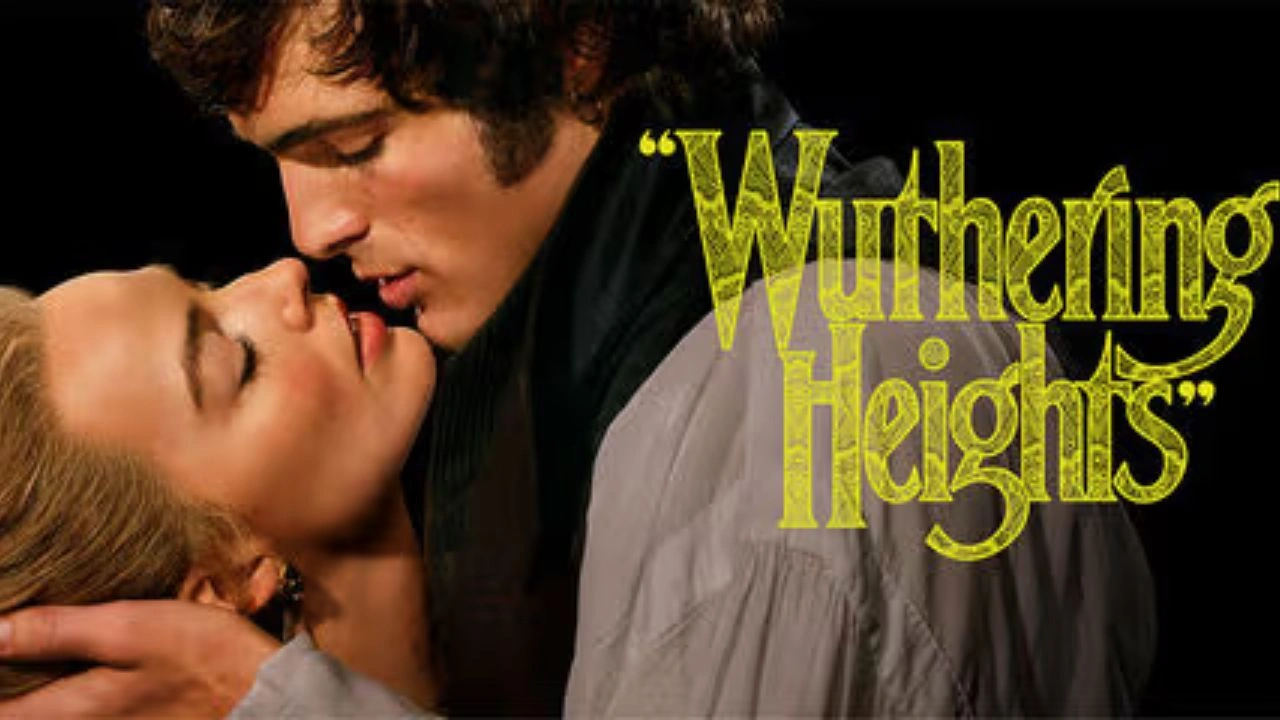
Wuthering Heights: A sweeping gothic romance returns to cinema, reigniting passion, revenge, and tragic destiny across windswept Yorkshire moors.
The 2026 adaptation of Wuthering Heights brings one of literature’s most intense love stories back to the big screen under the bold direction of Emerald Fennell. Starring Margot Robbie and Jacob Elordi, the film promises a visually arresting and emotionally charged interpretation of Wuthering Heights by Emily Brontë. Set for release on February 13, 2026, in the United Kingdom, the drama-romance production is already generating significant industry buzz.
A Bold New Vision from Emerald Fennell
The decision to entrust this adaptation to Emerald Fennell signals a dramatic and stylistic reinvention. Known for her distinctive storytelling voice and unflinching exploration of psychological complexity, Fennell approaches Wuthering Heights not merely as a romantic period drama, but as a searing examination of obsession, trauma, and generational vengeance.
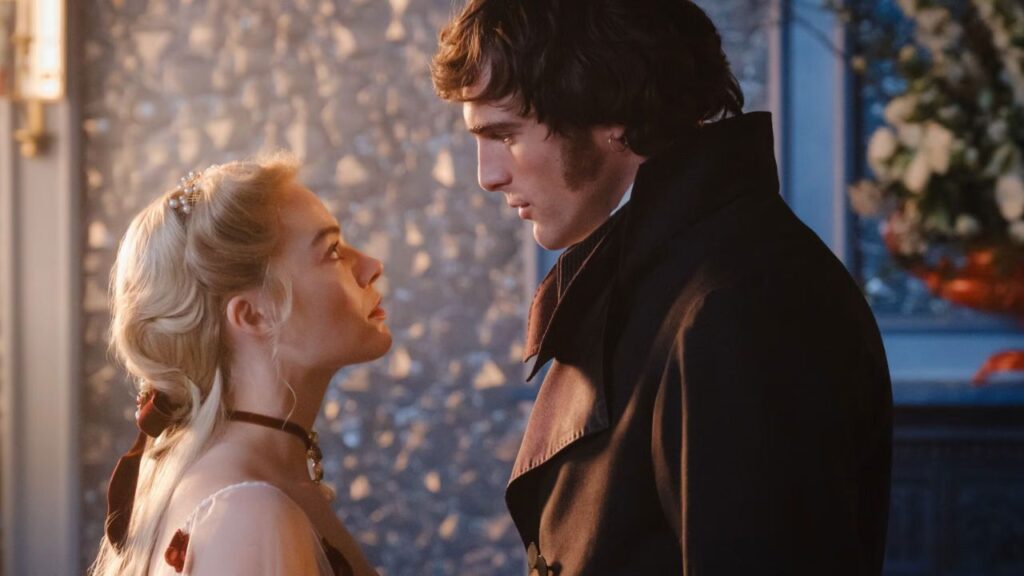
Her previous works have demonstrated an ability to blend lush aesthetics with deeply unsettling emotional landscapes. In this new adaptation, Fennell reportedly leans into the gothic intensity of the source material while modernizing its emotional language for contemporary audiences.
Rather than portraying Heathcliff and Catherine’s relationship as a sweeping fairy-tale romance, the film underscores its destructive volatility and moral ambiguity. Fennell has emphasized in interviews that the core of the story lies in its raw psychological truth — a love so powerful it becomes corrosive.
This reinterpretation reflects an evolving cinematic appetite for complex female perspectives. By placing Catherine Earnshaw at the emotional center of the narrative, Fennell reframes the novel’s dynamics through a lens that examines autonomy, societal constraint, and self-destruction.
Read Also: Toxic Movie 2026: Yash Headlines a Dark, Multilingual Crime Epic Set in Goa’s Shadowy Underworld
The Enduring Power of Emily Brontë’s Classic
First published in 1847, Wuthering Heights remains one of the most controversial and celebrated works of English literature. Written by Emily Brontë under the pseudonym Ellis Bell, the novel shocked Victorian readers with its morally ambiguous characters and fierce emotional intensity.
At its core, the story chronicles the tumultuous bond between Heathcliff, an orphan adopted into the Earnshaw family, and Catherine Earnshaw, whose love for him transcends social boundaries but ultimately collapses under societal expectations.
Unlike traditional romantic narratives of its time, Wuthering Heights presented a relationship defined by obsession, cruelty, and revenge. Heathcliff’s transformation from marginalized outsider to vengeful landowner remains one of literature’s most haunting character arcs.
The moody, windswept Yorkshire moors serve as more than a setting; they embody the characters’ inner turmoil. Nature itself becomes a metaphor for emotional chaos, reinforcing the novel’s gothic intensity.
Fennell’s adaptation seeks to preserve this thematic richness while translating its complexities into a cinematic language that resonates with 21st-century viewers.
Margot Robbie as Catherine Earnshaw
Casting Margot Robbie as Catherine Earnshaw represents one of the film’s most talked-about decisions. Robbie, celebrated for her versatility and emotional depth, brings both vulnerability and fierce intensity to the role.
Catherine is not merely a romantic heroine; she is a character torn between passion and ambition, wildness and social aspiration. Robbie’s screen presence allows her to embody this duality — the untamed girl of the moors and the woman constrained by class expectations.
Early production stills suggest a portrayal that emphasizes Catherine’s internal conflict. Her chemistry with Jacob Elordi’s Heathcliff is expected to drive the emotional core of the film, showcasing a relationship that is both magnetic and self-destructive.
Critics anticipate that Robbie’s performance could redefine Catherine for a new generation, challenging the traditional perception of the character as simply tragic. Instead, this version may highlight her agency and complicity in the unfolding catastrophe.
Jacob Elordi’s Heathcliff: A Modern Gothic Antihero
Opposite Robbie, Jacob Elordi steps into the formidable role of Heathcliff. Few literary characters possess such enduring notoriety; Heathcliff is at once romantic hero and ruthless villain.
Elordi’s casting suggests a fresh interpretation — one that emphasizes Heathcliff’s emotional wounds as much as his cruelty. This portrayal reportedly explores the character’s early marginalization and the psychological scars that fuel his relentless quest for revenge.
The challenge lies in balancing Heathcliff’s brutality with vulnerability. If successful, Elordi’s performance could deliver a portrayal that is both disturbing and empathetic, reflecting modern audiences’ fascination with morally complex antiheroes.
Heathcliff’s rage is not simplified; it is contextualized, allowing viewers to witness how love, rejection, and humiliation shape his descent into vengeance.
Hong Chau and the Supporting Ensemble
Joining Robbie and Elordi is Hong Chau, whose involvement adds further gravitas to the production. Known for her nuanced performances, Chau’s role remains partially under wraps, but insiders suggest she plays a pivotal character that influences the emotional trajectory of the narrative.
A strong supporting cast is essential in adapting Wuthering Heights, given the novel’s multi-generational structure and intricate relationships. The Earnshaw and Linton families form a web of social tension and inherited resentment, and each character contributes to the overarching tragedy.
Fennell’s emphasis on ensemble storytelling ensures that the film will not reduce the narrative to a simple love story, but rather depict a broader exploration of class, power, and generational trauma.
Visual Aesthetic: The Yorkshire Moors as Character
One of the defining elements of Wuthering Heights has always been its atmospheric setting. The 2026 film reportedly invests heavily in location cinematography to capture the stark beauty of the Yorkshire moors.
Rather than romanticizing the landscape, Fennell’s vision treats it as a living force — harsh, isolating, and majestic. The moors mirror the characters’ emotional volatility, reinforcing the story’s gothic tone.
The production design emphasizes contrasts: the raw wilderness surrounding Wuthering Heights versus the comparatively refined environment of Thrushcross Grange. This visual dichotomy underscores the tension between untamed passion and societal decorum.
Cinematography is expected to play a critical role, with sweeping wide shots juxtaposed against intimate close-ups that capture subtle emotional shifts. The landscape becomes an extension of the characters’ inner lives, blurring the line between environment and emotion.
Themes of Obsession, Class, and Identity
At its heart, Wuthering Heights is a meditation on love that transcends rational boundaries. But beneath the romance lies a critique of rigid social hierarchies.
Heathcliff’s outsider status drives much of the narrative conflict. His ambiguous origins and perceived lower status create a fracture that Catherine ultimately cannot reconcile. Her choice to marry Edgar Linton represents not only personal betrayal but also a capitulation to societal expectation.
Fennell’s adaptation reportedly sharpens this critique, examining how class prejudice and social ambition can distort genuine emotion. In doing so, the film resonates with contemporary conversations about inequality and identity.
Love in this story is neither pure nor redemptive — it is transformative and often destructive. This thematic complexity sets Wuthering Heights apart from conventional romance narratives.
Release Strategy and Anticipated Impact
Scheduled for release on February 13, 2026, in the United Kingdom, the film’s timing strategically aligns with Valentine’s season, though its tone is far darker than traditional romantic fare.
Produced across the United States and the United Kingdom, the English-language drama positions itself for both critical acclaim and awards consideration. The combination of high-profile stars, a respected director, and a revered literary source creates significant awards-season potential.
Industry analysts suggest that the film could introduce a new wave of interest in gothic romance adaptations, particularly those that prioritize psychological depth over spectacle.
Read Also: Good Luck Have Fun Don’t Die: A Sci-Fi Adventure That Turns One Night Into Humanity’s Final Stand
Official Trailer – Wuthering Heights Movie
Why This Adaptation Matters in 2026
Literary adaptations are perennial fixtures in cinema, yet each generation reinterprets classics through its own cultural lens. In 2026, audiences are increasingly drawn to narratives that confront emotional complexity and moral ambiguity.
Emerald Fennell’s Wuthering Heights arrives at a moment when viewers seek stories that challenge simplistic notions of love and heroism. By foregrounding psychological realism and social critique, the film promises relevance beyond its period setting.
The collaboration between Robbie and Elordi further amplifies its cultural footprint, merging star power with literary prestige.
Ultimately, this adaptation underscores the timeless relevance of Emily Brontë’s vision. More than a romance, it is a cautionary tale about unchecked passion, societal constraint, and the enduring consequences of emotional extremity.
6 thoughts on “Wuthering Heights Movie 2026: Emerald Fennell Reimagines a Timeless Tale of Obsession and Ruin”